
Loading document…
Argentine delegations at the COPs: numerical evolution, composition and gender
This report aims to analyze Argentina’s participation in the Conferences of the Parties (COPs) to the United Nations Framework Convention on Climate Change (UNFCCC) by examining the evolution and composition of the Argentine delegation. The report is based on a review of the COP participant lists prepared by the Convention Secretariat using the official participant registrations managed by each State. In addition to the introduction and conclusion, the document is divided into two sections. The first examines changes in the size of the Argentine delegation in relation to the total number of delegations representing States Parties to the Convention and the overall number of participants. The second analyzes the composition of Argentine delegations, including gender as a variable and the participation of key ministries within the National Executive Branch acting as focal points to the UNFCCC.
You may also be interested
GoGoGo to publications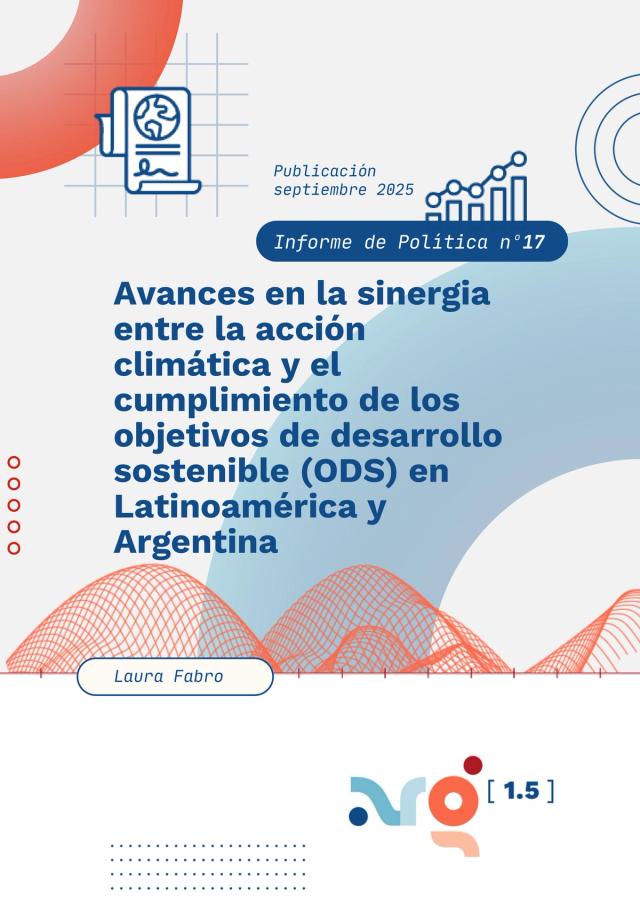
Progress in the synergy between climate action and SDGs in Latin America and Argentina
The objective of this policy report is to analyze the progress of the synergy between achieving the Sustainable Development Goals (SDGs) and climate action, as seen through the six global conferences on the topic. The most recent conference (in Copenhagen, 2025) again concluded that it is necessary to break down silos and strengthen synergies between climate action, environmental protection, and the SDGs to accelerate the necessary and urgent transitions toward a just, inclusive, and decarbonized future. Global progress and challenges for Latin America and Argentina are assessed. Furthermore, the report analyzes perspectives that can promote climate action and the achievement of the SDGs.
Progress in the synergy between climate action and SDGs in Latin America and Argentina
The objective of this policy report is to analyze the progress of the synergy between achieving the Sustainable Development Goals (SDGs) and climate action, as seen through the six global conferences on the topic. The most recent conference (in Copenhagen, 2025) again concluded that it is necessary to break down silos and strengthen synergies between climate action, environmental protection, and the SDGs to accelerate the necessary and urgent transitions toward a just, inclusive, and decarbonized future. Global progress and challenges for Latin America and Argentina are assessed. Furthermore, the report analyzes perspectives that can promote climate action and the achievement of the SDGs.
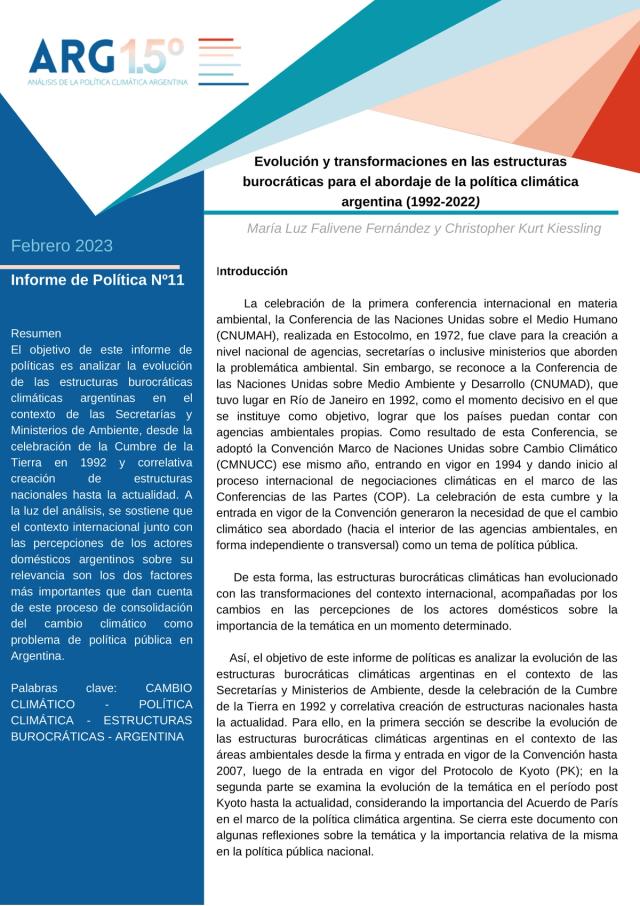
Evolution and transformations in climate bureaucratic structures (1992-2022)
The objective of this policy report is to analyze the evolution of Argentina's climate bureaucratic structures within the framework of the Ministries and Secretariats of the Environment, from the 1992 Earth Summit and the subsequent creation of national structures to the present day. The analysis argues that the international context, along with the perceptions of Argentine domestic actors regarding its relevance, are the two most important factors explaining the consolidation of climate change as a public policy issue in Argentina.
Evolution and transformations in climate bureaucratic structures (1992-2022)
The objective of this policy report is to analyze the evolution of Argentina's climate bureaucratic structures within the framework of the Ministries and Secretariats of the Environment, from the 1992 Earth Summit and the subsequent creation of national structures to the present day. The analysis argues that the international context, along with the perceptions of Argentine domestic actors regarding its relevance, are the two most important factors explaining the consolidation of climate change as a public policy issue in Argentina.
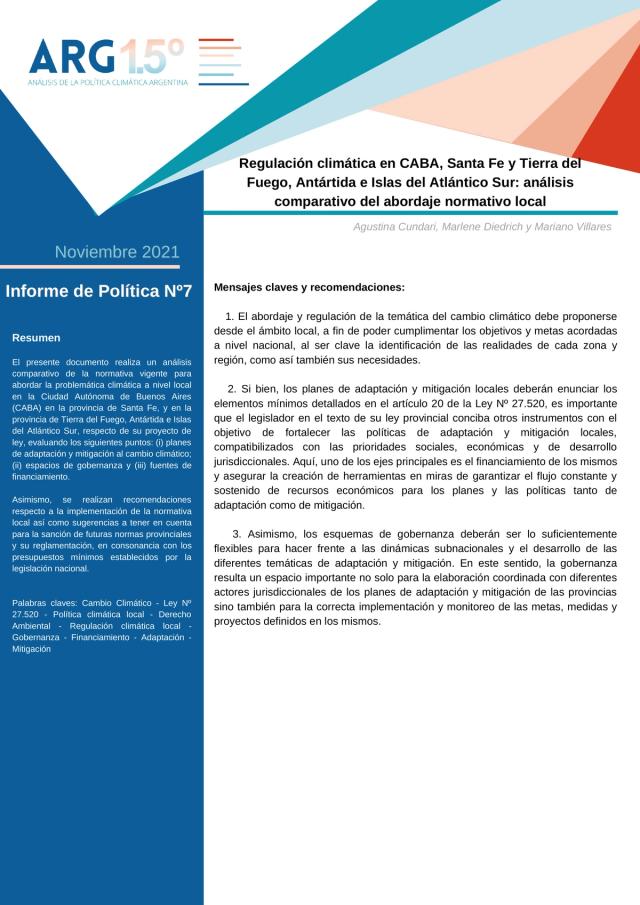
Climate regulation in CABA, Santa Fe and Tierra del Fuego: a comparative analysis
This document presents a comparative analysis of current regulations addressing climate change issues at the local level in the Autonomous City of Buenos Aires (CABA), the province of Santa Fe, and the province of Tierra del Fuego, Antarctica and the South Atlantic Islands, in relation to their respective draft laws. The analysis evaluates the following points: (i) climate change adaptation and mitigation plans; (ii) governance structures; and (iii) funding sources. Furthermore, it offers recommendations regarding the implementation of local regulations, as well as suggestions for the enactment and regulation of future provincial laws, in accordance with the minimum standards established by national legislation.
Climate regulation in CABA, Santa Fe and Tierra del Fuego: a comparative analysis
This document presents a comparative analysis of current regulations addressing climate change issues at the local level in the Autonomous City of Buenos Aires (CABA), the province of Santa Fe, and the province of Tierra del Fuego, Antarctica and the South Atlantic Islands, in relation to their respective draft laws. The analysis evaluates the following points: (i) climate change adaptation and mitigation plans; (ii) governance structures; and (iii) funding sources. Furthermore, it offers recommendations regarding the implementation of local regulations, as well as suggestions for the enactment and regulation of future provincial laws, in accordance with the minimum standards established by national legislation.