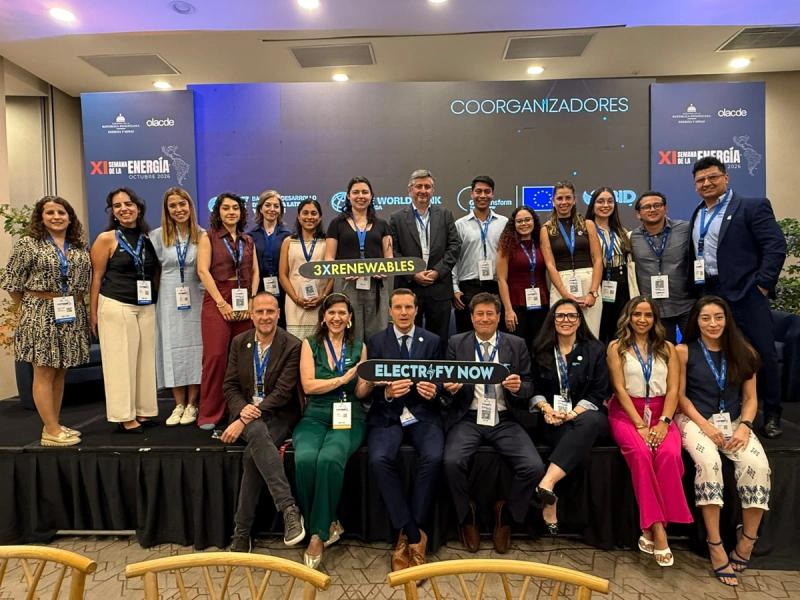
Argentina 1.5 participated in the 7th Climate and Sustainable Finance Week, organized by the Climate Finance Group for Latin America and the Caribbean (GFLAC), a space for exchange on the challenges to mobilize resources and ensure that climate finance responds to the needs of the most vulnerable countries and communities.
In this context, we highlight two central aspects of the international debate on climate finance: the need to translate political commitments into a concrete roadmap and the importance of ensuring that the resources mobilized are accessible, predictable and adequate for adaptation needs.
Tripling financing by 2035 represents a significant political signal, and its implementation requires concrete definitions. It is necessary to establish an agreed-upon baseline, verifiable intermediate milestones, and monitoring mechanisms, as well as link the target to the real needs of developing countries. According to the 2025 Adaptation Gap Report by the United Nations Environment Programme (UNEP), the financing needs for adaptation in developing countries could reach between USD 310 billion and 365 billion annually by 2035. Given this gap, it is crucial to specify which resources are included, who should contribute them, and what mechanisms will be in place to ensure their effective mobilization.
More financing is needed, but it must also be of better quality. The volume of resources is not the only challenge: their terms and the real possibilities of accessing them are also crucial. Climate finance must be predictable, accessible, and, especially for adaptation, include a greater proportion of concessional resources and grants, avoiding further indebtedness for vulnerable countries. It is also necessary to simplify procedures, strengthen direct access for institutions implementing measures, and promote country-led financing platforms. The effectiveness of financing must also be evaluated by its concrete results: that resources reach the territories and contribute to reducing vulnerabilities and strengthening the resilience of communities.
Nepal's experience illustrates the difficulties vulnerable countries face in accessing timely resources, particularly in the face of urgent needs. These challenges highlight the importance of mechanisms that not only mobilize financing but also ensure its availability when and where it is most needed.
COP31, to be held in Antalya, Turkey, in November 2026, presents an opportunity to advance the definition of a roadmap for operationalizing the financing target. The challenge will be to transform political commitments into concrete mechanisms, with clear responsibilities, transparent monitoring, and adequate resources to meet the needs of developing countries, especially regarding adaptation.