
Loading document…
Roadmap from Latin America and the Caribbean for a just energy transition
The Roadmap for a Just Energy Transition in Latin America and the Caribbean seeks to contribute to the international dialogue on a Just Energy Transition and a progressive and orderly phase-out of fossil fuels, which the region has led over the last three years through the actions of states and governments at COP 16 on Biodiversity in Cali (2024), COP 30 on Climate Change in Belém (2025), and the First Conference Beyond Fossil Fuels in Santa Marta (2026). However, this conversation has also been driven by diverse sectors of civil society, including Indigenous peoples, think tanks, social organizations, non-governmental organizations, labor unions, academia, environmental organizations, peasant organizations, and others. Today, we are moving forward with this proposed Roadmap, which includes a focus on concrete and achievable actions to reach the 1.5°C target of the Paris Agreement, but also to advance towards less unequal, more just, and more diverse societies. The document reflects the outcome of a process led by civil society organizations, regional networks, and experts from Latin America. It combines technical analysis, structured input developed through discussion and collaboration, and participatory spaces aimed at identifying practical options, sequencing strategies, barriers, and enabling conditions for advancing a gradual and orderly phase-out of fossil fuels in the region. In this way, it is hoped to contribute to the objective of identifying barriers, enabling factors, and differentiated options that can be adopted by countries, subnational entities, and economic sectors according to their specific circumstances.
You may also be interested
GoGoGo to publications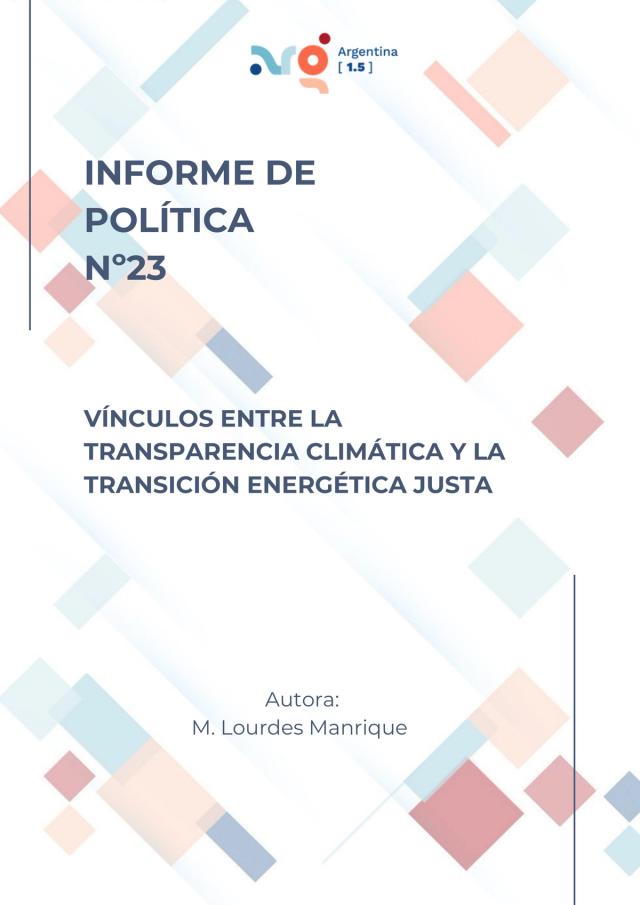
Links between climate transparency and a just energy transition
Within the framework of the United Nations Framework Convention on Climate Change (UNFCCC) and the Paris Agreement, multiple climate policy planning and reporting instruments exist through which countries communicate their commitments and progress, including Biennial Transparency Reports (BTRs), National Adaptation Plans (NAPs), and Nationally Determined Contributions (NDCs), among others. Among these instruments, BTRs play a central role in reporting progress on NDC implementation, including information on mitigation and adaptation measures, as well as financial, technological, and capacity-building support, and in contributing to the Global Stocktake process, which assesses collective progress toward the Paris Agreement goals. In this context, BTRs offer a key opportunity for countries to report on their Just Energy Transition (JET) pathways and their environmental, economic, and social dimensions. However, many countries face difficulties in meeting reporting requirements. These limitations are related to gaps in national information systems, insufficient technical capacities, and barriers to accessing climate finance. This policy brief analyzes how BTRs can serve as a vehicle for countries to report progress on their TEJs, identifies the main challenges countries—particularly developing countries—face in doing so, and examines the progress made at COP30 in Belém to strengthen reporting capacities.
Links between climate transparency and a just energy transition
Within the framework of the United Nations Framework Convention on Climate Change (UNFCCC) and the Paris Agreement, multiple climate policy planning and reporting instruments exist through which countries communicate their commitments and progress, including Biennial Transparency Reports (BTRs), National Adaptation Plans (NAPs), and Nationally Determined Contributions (NDCs), among others. Among these instruments, BTRs play a central role in reporting progress on NDC implementation, including information on mitigation and adaptation measures, as well as financial, technological, and capacity-building support, and in contributing to the Global Stocktake process, which assesses collective progress toward the Paris Agreement goals. In this context, BTRs offer a key opportunity for countries to report on their Just Energy Transition (JET) pathways and their environmental, economic, and social dimensions. However, many countries face difficulties in meeting reporting requirements. These limitations are related to gaps in national information systems, insufficient technical capacities, and barriers to accessing climate finance. This policy brief analyzes how BTRs can serve as a vehicle for countries to report progress on their TEJs, identifies the main challenges countries—particularly developing countries—face in doing so, and examines the progress made at COP30 in Belém to strengthen reporting capacities.
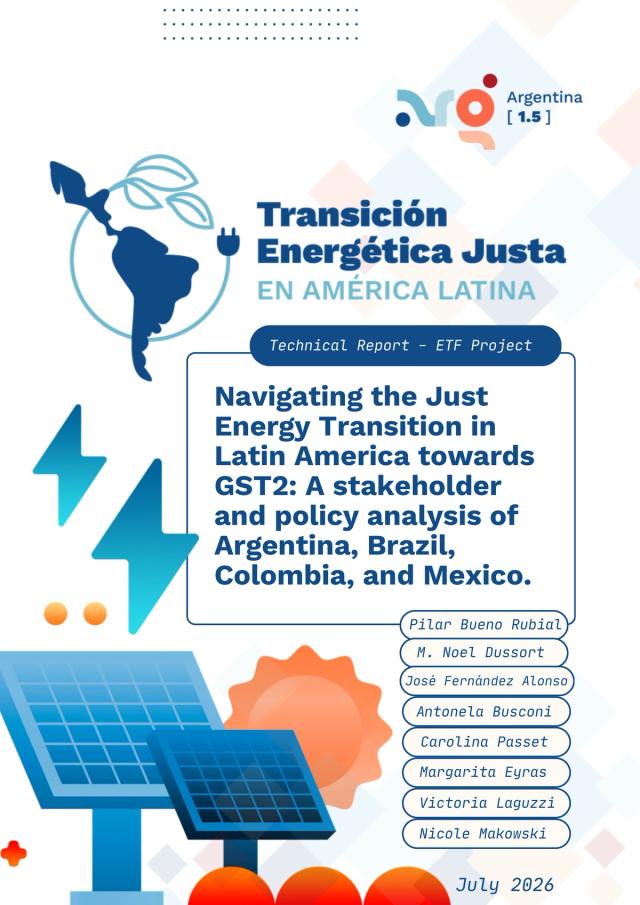
Navigating the just energy transition in Latin America Towards GST2: a stakeholder and policy analysis of Argentina, Brazil, Colombia, and Mexico.
This technical report was prepared as part of the project entitled: Latin America facing GST2: strengthening its role in the transition away from fossil fuels, executed by the energy division of Argentina 1.5. The project is based on the certainty of the region’s potential for a just energy transition and calls for cooperation among countries and multiple actors to mobilize domestic and international political positions toward paths consistent with the Paris Agreement. To do this, it relies on four regional cases: Argentina, Brazil, Colombia and Mexico. The report involves document review and data collection of official policy documents at the national level, such as national plans, strategies, as well as international documents, National Determined Contributions (NDC), Biennial Transparency Reports (BTRs), statements and submissions elaborated by negotiating groups of LAC at the UNFCCC: AILAC and grupo SUR. Also includes a mapping exercise of key stakeholders related but not limited to the energy sector, national energy authorities, UNFCCC negotiators, and NGOs, among others was also conducted.
Navigating the just energy transition in Latin America Towards GST2: a stakeholder and policy analysis of Argentina, Brazil, Colombia, and Mexico.
This technical report was prepared as part of the project entitled: Latin America facing GST2: strengthening its role in the transition away from fossil fuels, executed by the energy division of Argentina 1.5. The project is based on the certainty of the region’s potential for a just energy transition and calls for cooperation among countries and multiple actors to mobilize domestic and international political positions toward paths consistent with the Paris Agreement. To do this, it relies on four regional cases: Argentina, Brazil, Colombia and Mexico. The report involves document review and data collection of official policy documents at the national level, such as national plans, strategies, as well as international documents, National Determined Contributions (NDC), Biennial Transparency Reports (BTRs), statements and submissions elaborated by negotiating groups of LAC at the UNFCCC: AILAC and grupo SUR. Also includes a mapping exercise of key stakeholders related but not limited to the energy sector, national energy authorities, UNFCCC negotiators, and NGOs, among others was also conducted.
Written contributions for the First Conference on Transitioning Away from Fossil Fuels
Argentina 1.5 presents the following written contributions for the First Conference on Transitioning Away from Fossil Fuels. Given the organization's history, we focus particularly on strengthening international cooperation and climate diplomacy, while also including references to reducing economic dependence on fossil fuels.
Written contributions for the First Conference on Transitioning Away from Fossil Fuels
Argentina 1.5 presents the following written contributions for the First Conference on Transitioning Away from Fossil Fuels. Given the organization's history, we focus particularly on strengthening international cooperation and climate diplomacy, while also including references to reducing economic dependence on fossil fuels.