
Loading document…
Statement prepared by Fundación Argentina 1.5 Grados Centígrados on the occasion of the Public Hearing for the bill under review on the modification of the minimum budget regime for the protection of glaciers and the periglacial environment (File 0072-S-2025)
Argentina faces a critical juncture in the protection of its strategic water resources. Glaciers constitute a key natural infrastructure for water security and the management of current and future climate risks, as well as being part of its cultural heritage. Weakening their protection not only represents an environmental setback, but also increases economic, social, and institutional risks in a context of greater climate variability, recurring droughts, and pressure on freshwater resources.
You may also be interested
GoGoGo to publications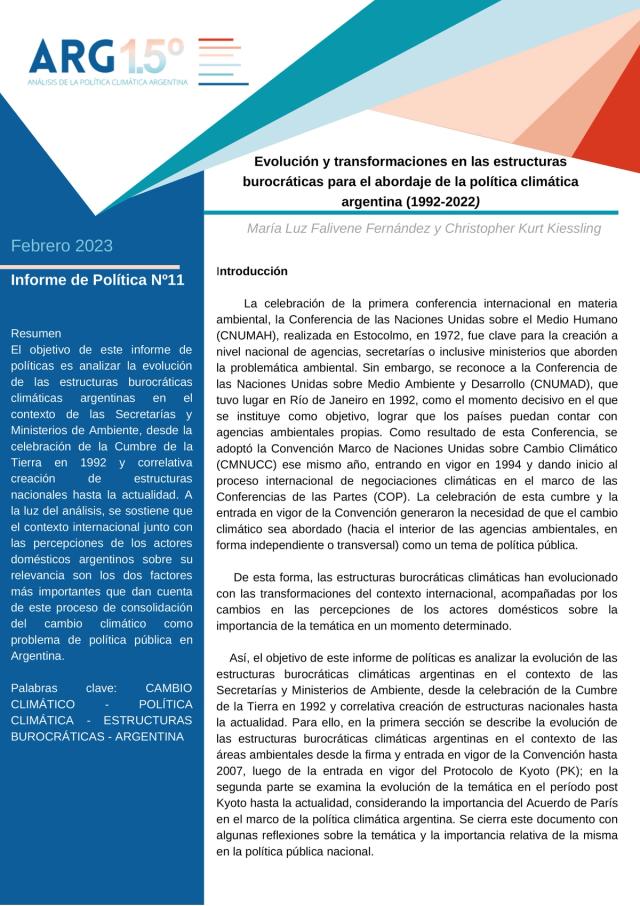
Evolution and transformations in climate bureaucratic structures (1992-2022)
The objective of this policy report is to analyze the evolution of Argentina's climate bureaucratic structures within the framework of the Ministries and Secretariats of the Environment, from the 1992 Earth Summit and the subsequent creation of national structures to the present day. The analysis argues that the international context, along with the perceptions of Argentine domestic actors regarding its relevance, are the two most important factors explaining the consolidation of climate change as a public policy issue in Argentina.
Evolution and transformations in climate bureaucratic structures (1992-2022)
The objective of this policy report is to analyze the evolution of Argentina's climate bureaucratic structures within the framework of the Ministries and Secretariats of the Environment, from the 1992 Earth Summit and the subsequent creation of national structures to the present day. The analysis argues that the international context, along with the perceptions of Argentine domestic actors regarding its relevance, are the two most important factors explaining the consolidation of climate change as a public policy issue in Argentina.
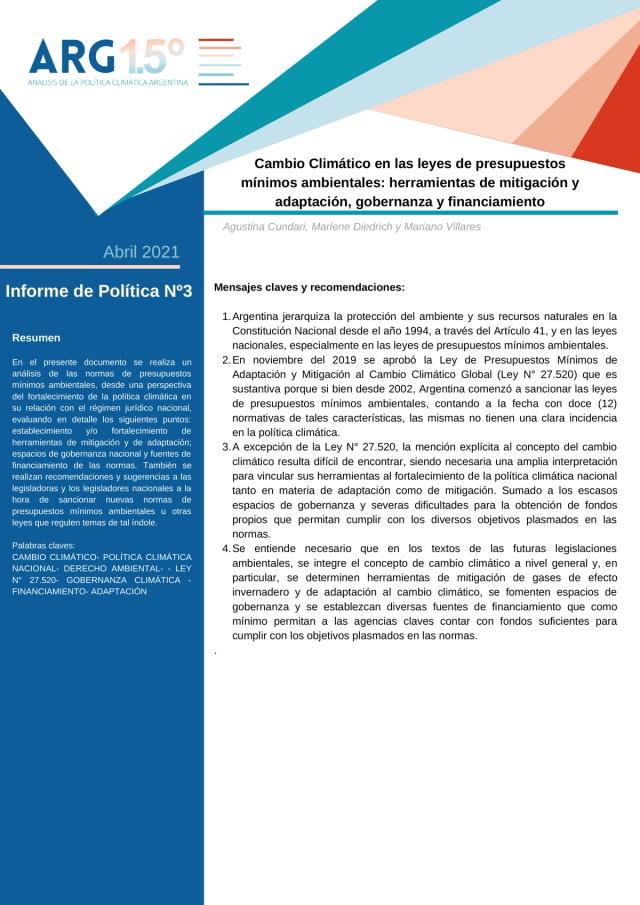
Minimum budget laws: mitigation, adaptation, governance and financing
This document analyzes Argentina’s environmental minimum standards legislation from the perspective of strengthening climate policy and its relationship with the national legal framework. It provides a detailed assessment of the following aspects: the establishment and/or strengthening of mitigation and adaptation tools; national governance arrangements; and funding sources for the implementation of such legislation. The document also offers recommendations and suggestions for national legislators to consider when enacting new environmental minimum standards legislation or other laws addressing related issues.
Minimum budget laws: mitigation, adaptation, governance and financing
This document analyzes Argentina’s environmental minimum standards legislation from the perspective of strengthening climate policy and its relationship with the national legal framework. It provides a detailed assessment of the following aspects: the establishment and/or strengthening of mitigation and adaptation tools; national governance arrangements; and funding sources for the implementation of such legislation. The document also offers recommendations and suggestions for national legislators to consider when enacting new environmental minimum standards legislation or other laws addressing related issues.
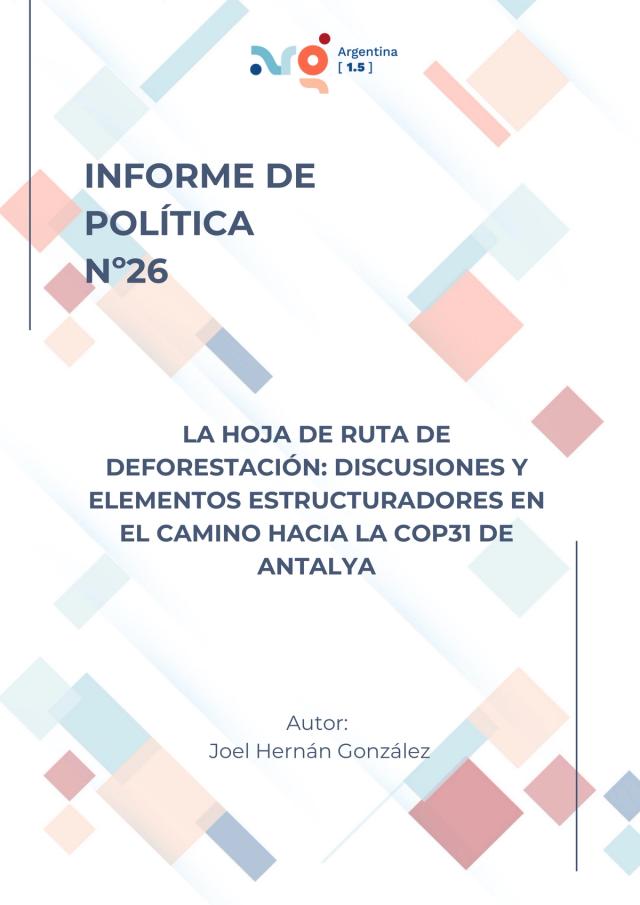
Deforestation Roadmap: discussions and structuring elements on the road to COP31 in Antalya
Forests provide essential ecosystem services for addressing the global environmental and climate crisis. Their capacity to store carbon, regulate hydrological cycles, stabilize regional temperatures, conserve biodiversity, and sustain the livelihoods of millions of people makes them a central component of international mitigation and adaptation strategies. Given their importance, forest management has gained increasing prominence on the international agenda. The most recent effort to revitalize this agenda is the Roadmap to Halt and Reverse Deforestation and Forest Degradation by 2030, launched by the COP30 Presidency in response to paragraphs 33 and 34 of the first Global Stocktake. This Policy Brief aims to briefly reconstruct the evolution of the forest agenda within the UNFCCC; examine the key features of the initiative; and highlight the main elements that emerged from the submissions and discussions held by the Parties. Finally, it is proposed to identify a series of barriers and recommendations associated with them, aimed at strengthening the Leaflet process on the way to the Conference of the Parties (COP31) of the UNFCCC that will take place in Antalya.
Deforestation Roadmap: discussions and structuring elements on the road to COP31 in Antalya
Forests provide essential ecosystem services for addressing the global environmental and climate crisis. Their capacity to store carbon, regulate hydrological cycles, stabilize regional temperatures, conserve biodiversity, and sustain the livelihoods of millions of people makes them a central component of international mitigation and adaptation strategies. Given their importance, forest management has gained increasing prominence on the international agenda. The most recent effort to revitalize this agenda is the Roadmap to Halt and Reverse Deforestation and Forest Degradation by 2030, launched by the COP30 Presidency in response to paragraphs 33 and 34 of the first Global Stocktake. This Policy Brief aims to briefly reconstruct the evolution of the forest agenda within the UNFCCC; examine the key features of the initiative; and highlight the main elements that emerged from the submissions and discussions held by the Parties. Finally, it is proposed to identify a series of barriers and recommendations associated with them, aimed at strengthening the Leaflet process on the way to the Conference of the Parties (COP31) of the UNFCCC that will take place in Antalya.