
Loading document…
Subnational climate plans and regulations in Argentina: the case of Jujuy
The objective of this Policy Report is to describe the climate policies and regulations of the province of Jujuy, Argentina, in light of available public instruments, taking into account: bureaucratic structures, the governance model and participatory policy design processes, the gender perspective, adaptation and mitigation policy instruments, and monitoring systems.
You may also be interested
GoGoGo to publications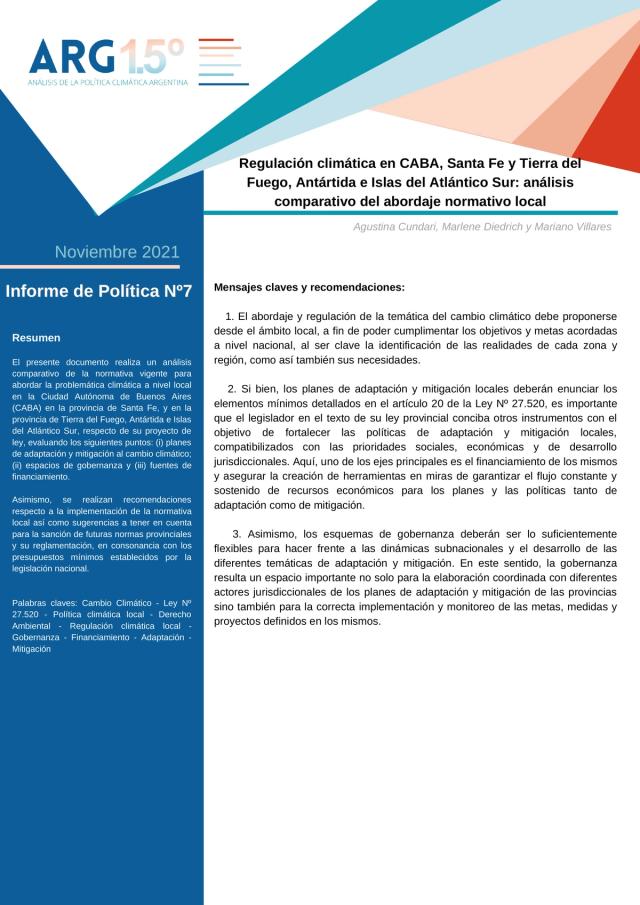
Climate regulation in CABA, Santa Fe and Tierra del Fuego: a comparative analysis
This document presents a comparative analysis of current regulations addressing climate change issues at the local level in the Autonomous City of Buenos Aires (CABA), the province of Santa Fe, and the province of Tierra del Fuego, Antarctica and the South Atlantic Islands, in relation to their respective draft laws. The analysis evaluates the following points: (i) climate change adaptation and mitigation plans; (ii) governance structures; and (iii) funding sources. Furthermore, it offers recommendations regarding the implementation of local regulations, as well as suggestions for the enactment and regulation of future provincial laws, in accordance with the minimum standards established by national legislation.
Climate regulation in CABA, Santa Fe and Tierra del Fuego: a comparative analysis
This document presents a comparative analysis of current regulations addressing climate change issues at the local level in the Autonomous City of Buenos Aires (CABA), the province of Santa Fe, and the province of Tierra del Fuego, Antarctica and the South Atlantic Islands, in relation to their respective draft laws. The analysis evaluates the following points: (i) climate change adaptation and mitigation plans; (ii) governance structures; and (iii) funding sources. Furthermore, it offers recommendations regarding the implementation of local regulations, as well as suggestions for the enactment and regulation of future provincial laws, in accordance with the minimum standards established by national legislation.
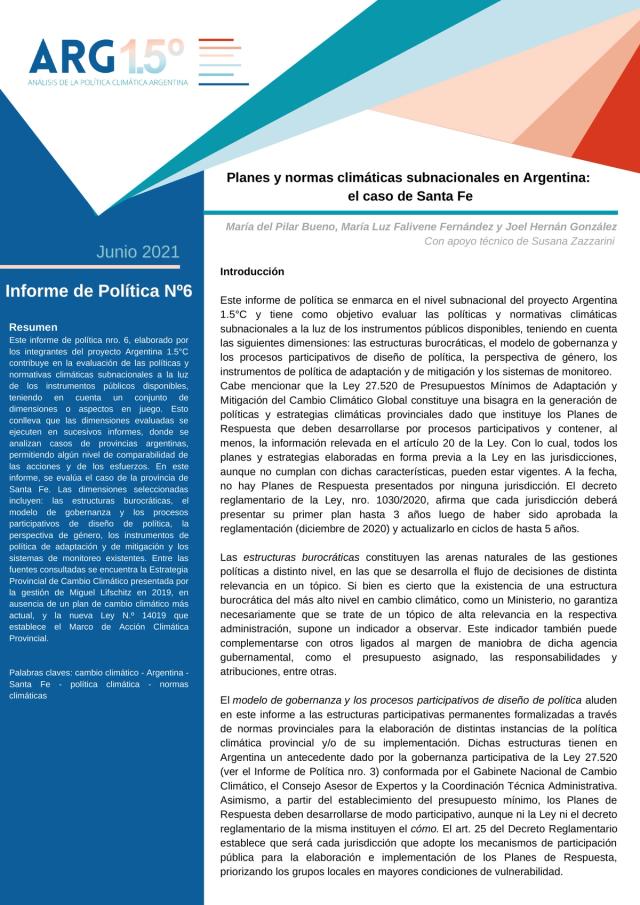
Subnational climate plans and standards in Argentina: the case of Santa Fe
This policy report contributes to the evaluation of subnational climate policies and regulations in light of available public instruments, taking into account a range of dimensions or aspects at play. This entails that the evaluated dimensions will be addressed in subsequent reports, which will analyze cases from Argentine provinces, allowing for some level of comparability of actions and efforts. This report evaluates the case of the province of Santa Fe. The selected dimensions include: bureaucratic structures, the governance model and participatory policy design processes, the gender perspective, adaptation and mitigation policy instruments, and existing monitoring systems. Among the sources consulted are the Provincial Climate Change Strategy presented by the administration of Miguel Lifschitz in 2019, in the absence of a more up-to-date climate change plan, and the new Law No. 14019, which establishes the Provincial Climate Action Framework.
Subnational climate plans and standards in Argentina: the case of Santa Fe
This policy report contributes to the evaluation of subnational climate policies and regulations in light of available public instruments, taking into account a range of dimensions or aspects at play. This entails that the evaluated dimensions will be addressed in subsequent reports, which will analyze cases from Argentine provinces, allowing for some level of comparability of actions and efforts. This report evaluates the case of the province of Santa Fe. The selected dimensions include: bureaucratic structures, the governance model and participatory policy design processes, the gender perspective, adaptation and mitigation policy instruments, and existing monitoring systems. Among the sources consulted are the Provincial Climate Change Strategy presented by the administration of Miguel Lifschitz in 2019, in the absence of a more up-to-date climate change plan, and the new Law No. 14019, which establishes the Provincial Climate Action Framework.
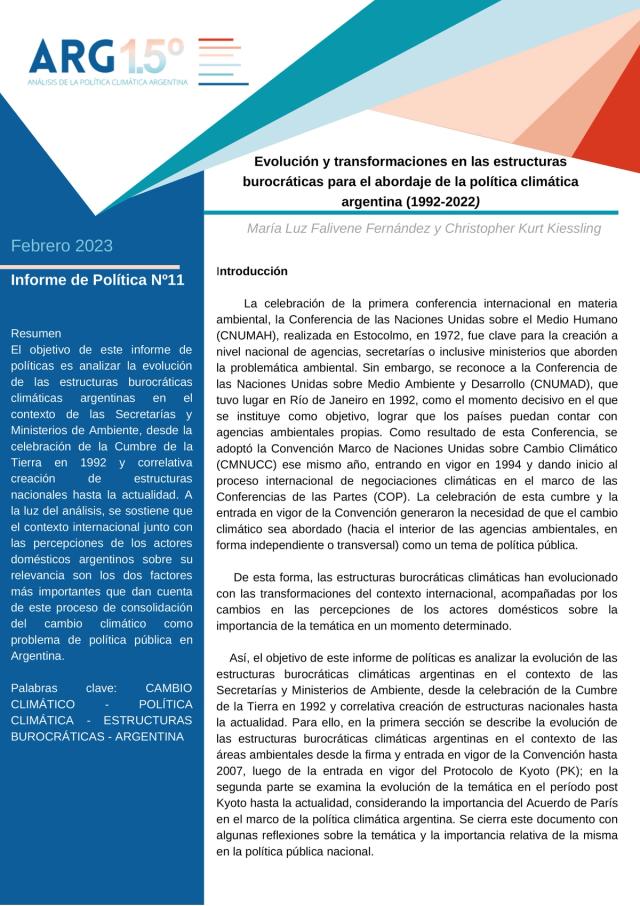
Evolution and transformations in climate bureaucratic structures (1992-2022)
The objective of this policy report is to analyze the evolution of Argentina's climate bureaucratic structures within the framework of the Ministries and Secretariats of the Environment, from the 1992 Earth Summit and the subsequent creation of national structures to the present day. The analysis argues that the international context, along with the perceptions of Argentine domestic actors regarding its relevance, are the two most important factors explaining the consolidation of climate change as a public policy issue in Argentina.
Evolution and transformations in climate bureaucratic structures (1992-2022)
The objective of this policy report is to analyze the evolution of Argentina's climate bureaucratic structures within the framework of the Ministries and Secretariats of the Environment, from the 1992 Earth Summit and the subsequent creation of national structures to the present day. The analysis argues that the international context, along with the perceptions of Argentine domestic actors regarding its relevance, are the two most important factors explaining the consolidation of climate change as a public policy issue in Argentina.