

Pensamiento climático contemporáneo
Investigamos, articulamos y comunicamos evidencia para impulsar políticas públicas climáticas conforme a la ciencia y una transición justa desde y para las comunidades.
Conectar evidencia, personas y decisiones
Somos un espacio independiente que conecta evidencia científica, personas y decisiones públicas para impulsar una transición justa que contemple las dimensiones sociales, económicas y ambientales del cambio climático.
Áreas de trabajo
Ir a áreasIr a áreas de trabajoIr a áreas de trabajo
Adaptación y Pérdidas y daños
Impulsamos una acción acelerada en adaptación bajo un enfoque multinivel y promovemos mecanismos para afrontar las pérdidas y daños climáticos.

Mitigación y Transición energética
Fomentamos la reducción de emisiones y la transición energética justa para asegurar un futuro sostenible y alineado con la meta global de temperatura.

Finanzas verdes y climáticas
Analizamos y promovemos flujos financieros compatibles con un desarrollo resiliente y con trayectorias de bajas emisiones de gases de efecto invernadero.
PublicacionesPublicaciones destacadas
IrIrIr a publicaciones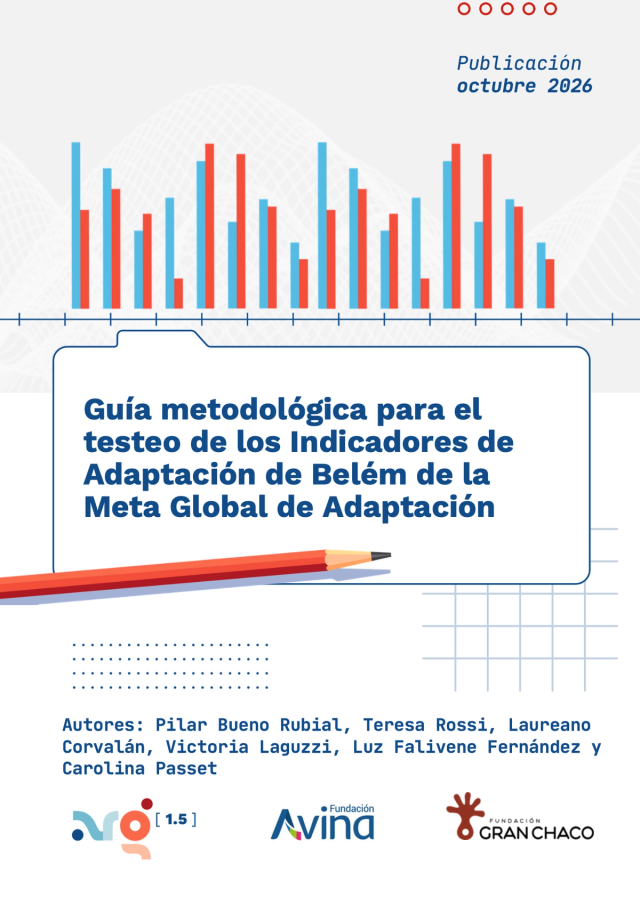
Guía metodológica para el testeo de los Indicadores de Adaptación de Belém de la Meta Global de Adaptación
Esta guía ha sido elaborada por la Fundación Argentina 1.5 y la Fundación Gran Chaco, con el apoyo de Fundación Avina, conjugando las experiencias de la acción de adaptación multinivel de dichas organizaciones, así como partiendo de un ejercicio de testeo en la provincia de Chaco, Argentina. La guía tiene como objetivo aportar al esfuerzo global de testeo de los Indicadores de Adaptación de Belém, brindando una perspectiva práctica construida a partir de 11 entrevistas realizadas con representantes de países, grupos de países y organizaciones que generosamente compartieron sus procesos, desafíos y expectativas.
Guía metodológica para el testeo de los Indicadores de Adaptación de Belém de la Meta Global de Adaptación
Esta guía ha sido elaborada por la Fundación Argentina 1.5 y la Fundación Gran Chaco, con el apoyo de Fundación Avina, conjugando las experiencias de la acción de adaptación multinivel de dichas organizaciones, así como partiendo de un ejercicio de testeo en la provincia de Chaco, Argentina. La guía tiene como objetivo aportar al esfuerzo global de testeo de los Indicadores de Adaptación de Belém, brindando una perspectiva práctica construida a partir de 11 entrevistas realizadas con representantes de países, grupos de países y organizaciones que generosamente compartieron sus procesos, desafíos y expectativas.
Bitácora climática
VerVer bitácora completaVer bitácora completa
Construimos en red


















Colaboremos para multiplicar impacto
Trabajamos junto a gobiernos, organizaciones, la academia y la sociedad civil, desde la firme convicción de que las alianzas estratégicas y la cooperación multisectorial multiplican el impacto de la acción climática.