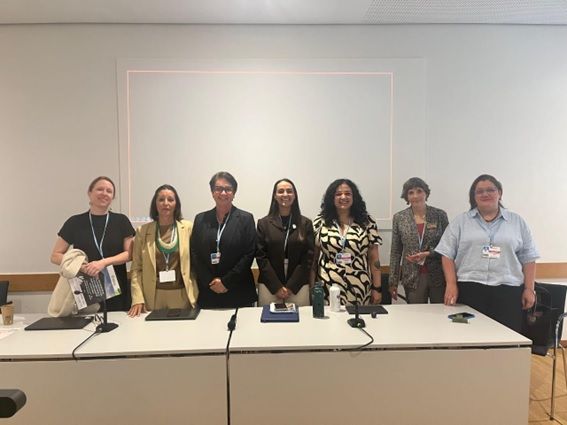
Within the framework of SB64, the conversation on climate adaptation had an increasingly prominent focus: how do we know if adaptation policies and actions are working?
This question was the focus of the event "Measuring what matters: Developing monitoring, evaluation and learning (MEL) systems for adaptation," organized by UNEP-WCMC in conjunction with Argentina 1.5, Fundación Gran Chaco, and representatives from Guatemala, Brazil, and Costa Rica. The meeting brought together experiences from various Latin American countries to discuss the challenges of building monitoring, evaluation, and learning (MEL) systems capable of generating useful evidence for decision-making.
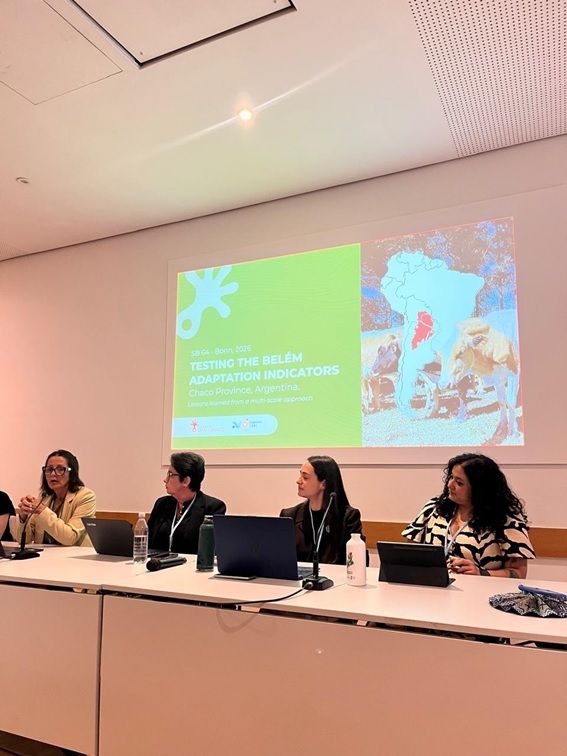
During the meeting, Argentina 1.5, together with Fundación Gran Chaco, presented the work we have developed to advance the testing of the Belém Indicators for Adaptation. The project aimed to explore how this new global framework can be integrated with existing information systems and capacities at the national and subnational levels.
The presentation allowed for sharing the main challenges and lessons learned from the process, as well as reflecting on the importance of developing monitoring, evaluation and learning (MEL) systems that allow data to be transformed into useful evidence for decision-making.
The 59 Belém Indicators, adopted at COP30, represent a significant step forward in measuring global progress on adaptation. However, their implementation raises a new question: how can this global framework be translated to local levels and made into a useful tool for guiding public policy?
Gallery