From October 14 to 16, 2026, the 2nd Rosario Climate Week took place, providing a forum for civil society organizations, specialists, institutions, and stakeholders committed to climate action. The event was organized by the Municipality of Rosario and Fundación Nueva Generación Argentina (FNGA). Within this framework, Argentina 1.5 participated in two activities aimed at promoting a just energy transition and strengthening the implementation of the Global Adaptation Goal (GGA), in preparation for COP31 and the second Global Stocktake (GST2) of the United Nations Framework Convention on Climate Change.
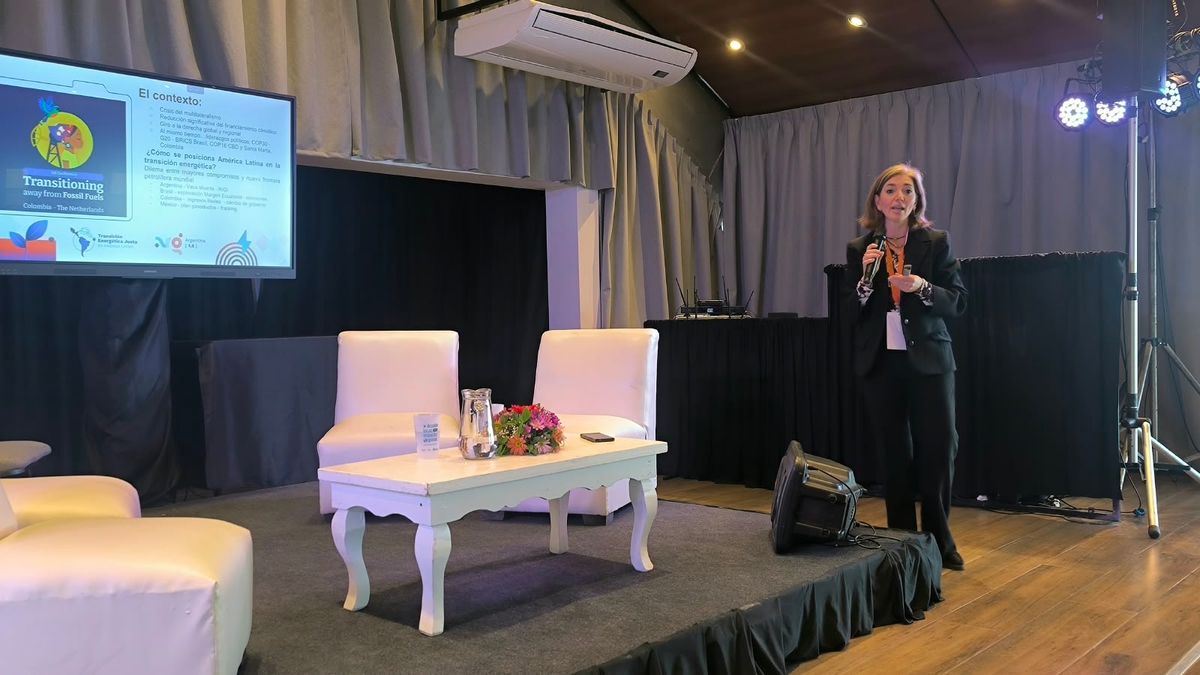
On October 14, Argentina 1.5 organized the workshop Prosperity without fossils: from global geopolitics to a just energy transition, together with facilitators from the Environment and Natural Resources Foundation (FARN) and Consciente Colectivo.
During the activity, the Foundation's technical report "Navigating the Just Energy Transition in Latin America towards GST2" was presented, and an exchange was facilitated on public policy recommendations at the national, regional, and international levels, with the aim of identifying opportunities to strengthen cooperation, sustain climate ambition, and promote an energy transition compatible with social well-being.
At the national level, the need to address the fiscal gap was highlighted through gradual strategies for replacing hydrocarbon subsidies and redirecting resources toward grid-connected renewable energy, decentralized rural electrification, and social funds to combat energy poverty. The importance of redefining energy sovereignty based on technological autonomy, democratizing the system, and community-based and distributed generation was also emphasized, as was the need to promote subnational and international alliances that allow for scaling up successful experiences and sustaining them through the changes of electoral cycles.
At the regional level, the opportunity to build a positive narrative of fossil-free prosperity was emphasized, one that links the phase-out of fossil fuels with macroeconomic stability, sovereignty, and well-being. In this regard, the upcoming COP31 and COP32 represent strategic opportunities to strengthen coordination and consolidate common positions before the political phase of the second Global Stocktake (GST2).
At the international level, it was proposed to incorporate indicators of just energy transition (JET) and fossil-free prosperity (SFP) into the Biennial Transparency Reports (BTRs), including qualitative and quantitative variables on job retraining, gender equality, access to energy, and socio-environmental impacts. The need to move towards a coordinated position that integrates the phasing out of fossil fuels, financing as a means of implementation, and just transition and adaptation was also raised.
The exchange facilitated a dialogue between the challenges of the energy transition in Latin America and the opportunities for regional cooperation and influence in multilateral processes, highlighting the importance of building responses that integrate productive transformation, social justice, and climate action.
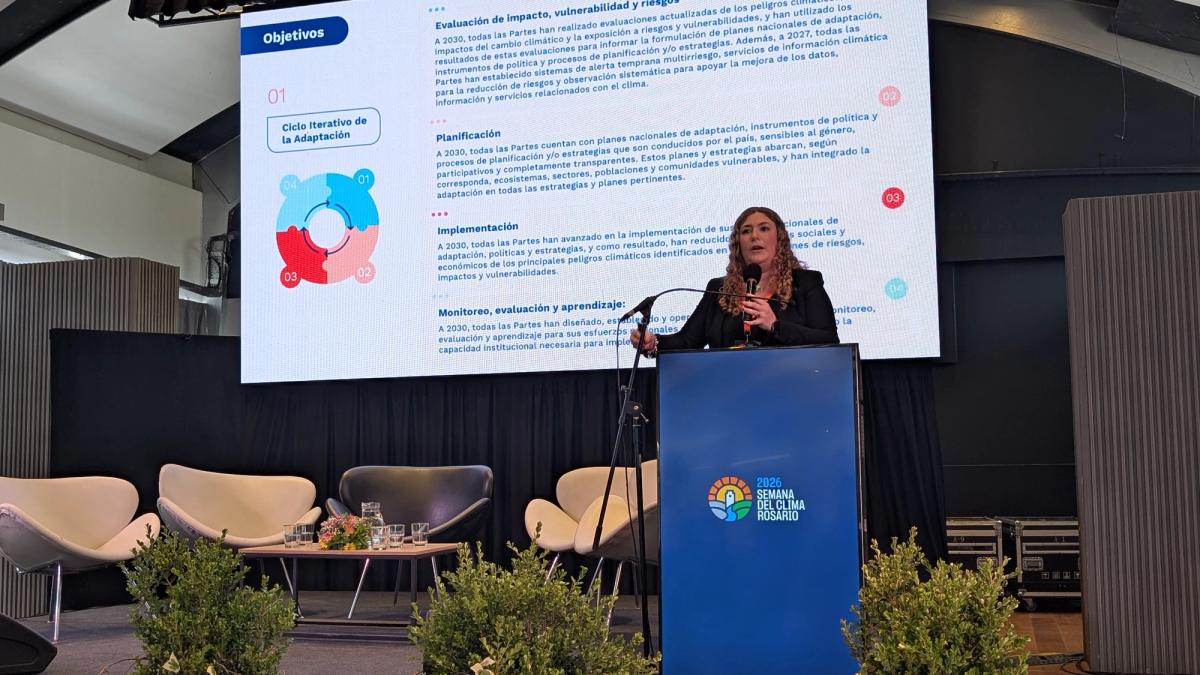
On the other hand, on October 15, Pilar Bueno, executive director of Argentina 1.5, gave a talk entitled "Road to COP31. Global Adaptation Goal: how to make local voices reach the second Global Stocktake."
The presentation addressed the challenge of connecting the experiences, needs, and priorities of local communities with international processes for evaluating climate action. In particular, it highlighted the importance of strengthening mechanisms for information gathering, participation, and institutional coordination so that progress and adaptation needs can be reflected in national policies and reports submitted to the Convention.
In this process, the participation of multiple actors is fundamental to building an assessment of adaptation that incorporates both scientific evidence and the knowledge and experiences of the communities.
The main possible contributions identified were:
Local and subnational governments: produce and systematize data on territorial risks and vulnerabilities, link them to local and provincial plans, participate in the testing of indicators and methodologies and promote their incorporation into reporting instruments, such as BTRs, Adaptation Communications (AdComs) and National Adaptation Plans (NAPs).
Academia and research centers: build baselines and data series, contribute to the testing and validation of methodologies, identify information gaps and strengthen capacities throughout the entire cycle of public adaptation policies.
Civil society and grassroots organizations: contribute territorial knowledge and citizen science experiences, independently monitor policies, and actively participate in climate governance spaces.
Communities, indigenous peoples, women and youth: contribute with traditional and local knowledge about climate risks and response strategies, as well as participate in the design, implementation and monitoring of adaptation measures.
Private, productive and financial sector: share information on climate impacts, losses and resilience of infrastructure, services and production chains, as well as contribute to mobilizing investments and financing for adaptation.
The talk highlighted that strengthening the Global Adaptation Goal (GGA) requires not only improving indicators and information systems, but also ensuring that territorial priorities can influence the design, implementation, and evaluation of climate policies.
In the lead-up to COP31 and the second Global Stocktake, advancing this coordination represents an opportunity to reduce the gap between international commitments and local realities, promoting more relevant, inclusive and effective adaptation policies.
Gallery